PRE-LAUNCH SALE Ends on
You Already Understand U.S. Healthcare Claims Billing. Now Learn to DECODE the EDI Behind Them.
14 Day Claims EDI Decoder 14 Day Claims EDI Decoder is designed for U.S. healthcare professionals who already understand claims billing but want to finally understand what that information looks like inside an EDI file.
PRE-LAUNCH SALE!
Join before Learn to READ IT • FIND IT • FIX IT • INVESTIGATE IT using actual U.S. healthcare claims EDI and practical, beginner-friendly training.
Get lifetime access during the pre-launch for $97.
Regular price: $299

"The training breaks everything easy to follow process. Insanely worth it" - Anthony G.
"This person changed my life, I get 10x the results now" - Paul X.
"I was a dumpster fire before I found this. I'm getting 100x what I paid for this course!" - Dan G.
Let's Face It...
EDI Can Feel Like an Entirely Different Language.
❌
You Know Claims
Not EDI
You already understand providers, members, diagnoses, procedures, dates, charges, and the information behind a healthcare claim. But when that same information appears inside an EDI file, it can look completely unfamiliar.
❌
You Don't Know
Where to Start
You’ve heard the term EDI, but no one has ever shown you what’s actually inside an EDI file or how it connects to the healthcare claims you already understand. So where do you even begin?
❌
EDI Feels Like
Someone Else's Job
When an EDI issue comes up, it's easy to assume it belongs with “the EDI person”—especially when you've never been shown how the claim information you already understand appears inside the file.
Introducing
The 14 Day Claims EDI Decoder
✅
See What’s Inside
the EDI File
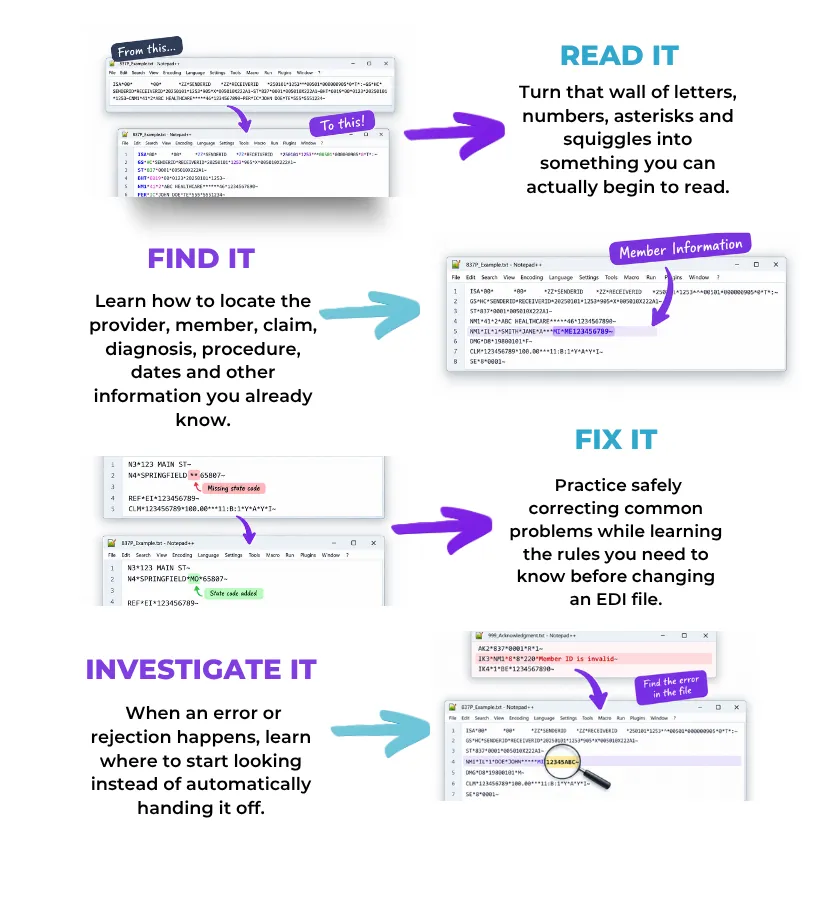
Learn how the healthcare claim information you already understand appears inside an actual EDI file—so it stops looking like a wall of random letters, numbers, and symbols.
✅
Know Where to Start Looking
Learn how to navigate the file and locate familiar information like providers, members, claim details, diagnoses, procedures, dates, and charges.
✅
Investigate With Confidence
When an EDI error or rejection happens, have a better understanding of where to start looking, what to investigate, and when a problem may need to be corrected at the source.
And That’s Just the Beginning...
Scroll down to see what’s included in the 14 Day Claims EDI Decoder.
Learn How To:
14 Day Claims EDI Decoder
Course Curriculum
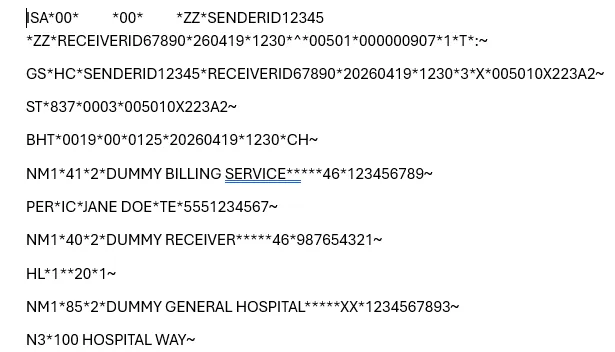
Learn With Actual EDI Files
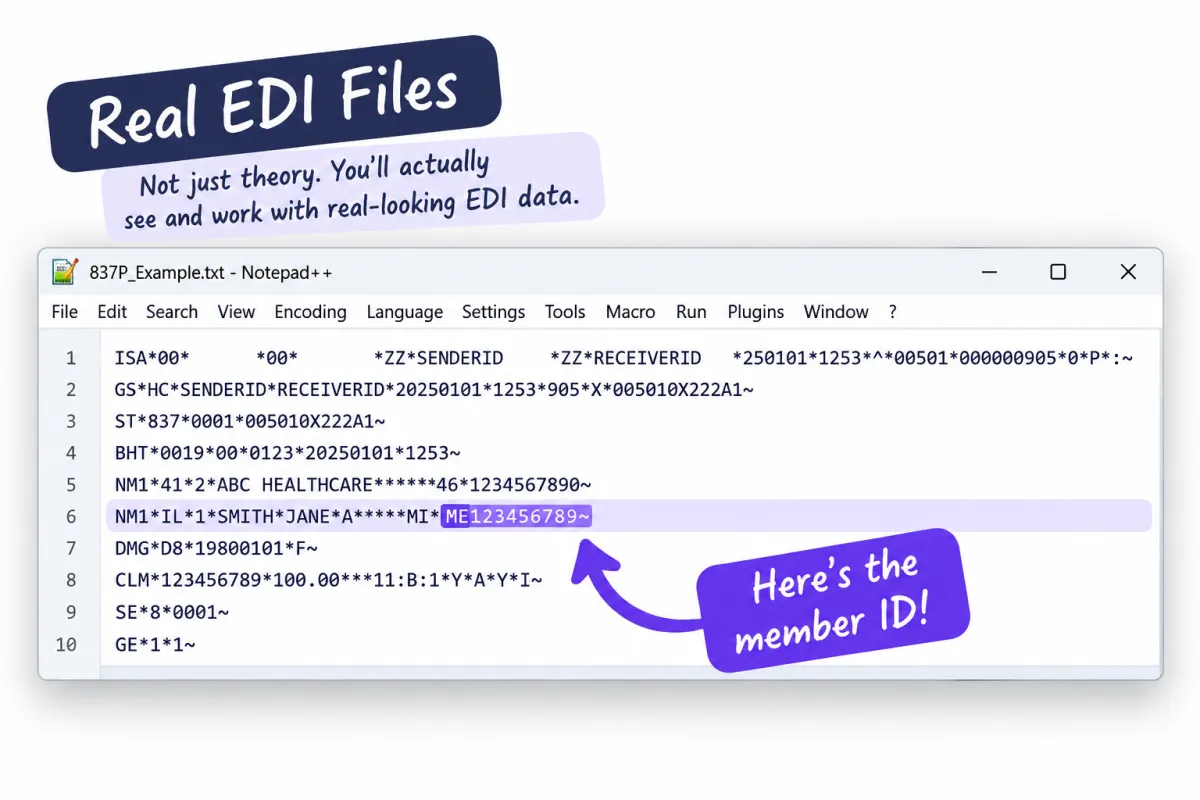
You won't just hear someone talk about healthcare EDI. You'll actually see and work with EDI files so you can connect what you're learning to what you'll encounter on the job.
Guided 837P and 837I examples walk you through real-looking claim data step by step, starting with information you already recognize from healthcare claims.
Instead of trying to memorize abstract terminology, you begin recognizing what you're looking at and where familiar claim information lives.
Practice It Yourself
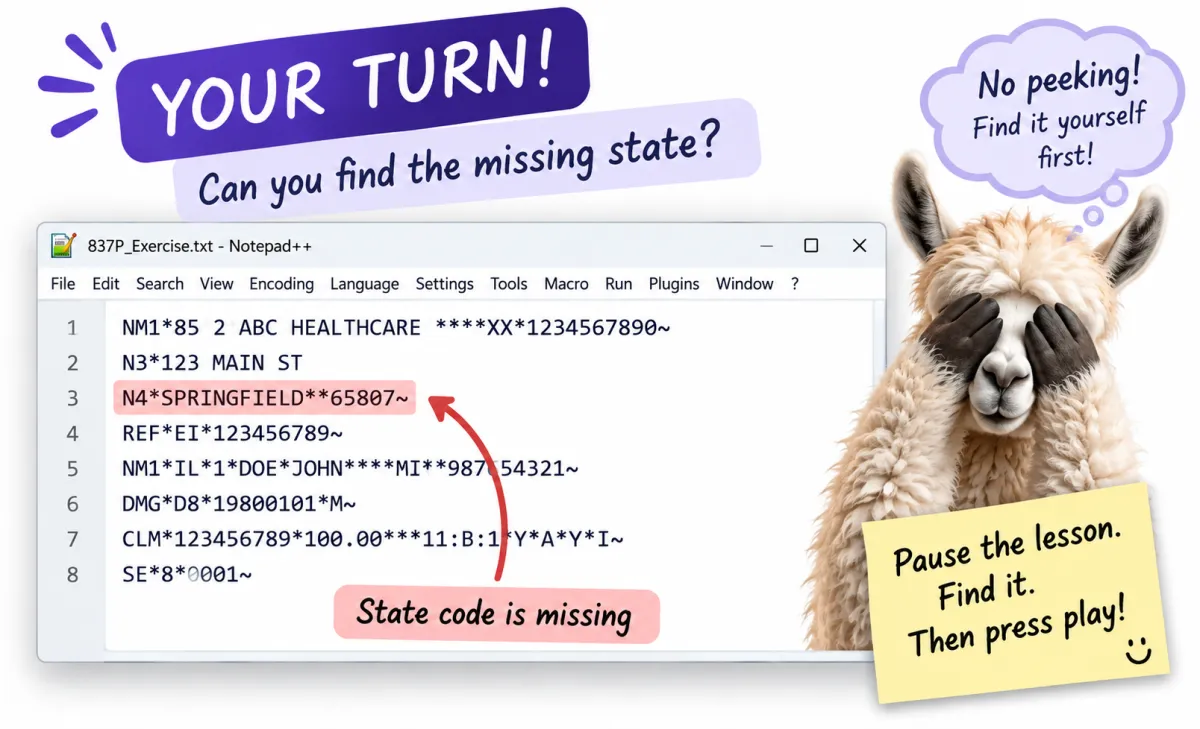
Watching someone else work through EDI is one thing. Being able to find and fix something yourself is what builds confidence.
Guided Find It and Fix It exercises let you pause the lesson, locate information or identify a problem yourself, then continue to see the answer.
You're not just consuming information—you'll practice using it so you can start developing skills you can take back to your job.
Keep a Quick Reference Beside You
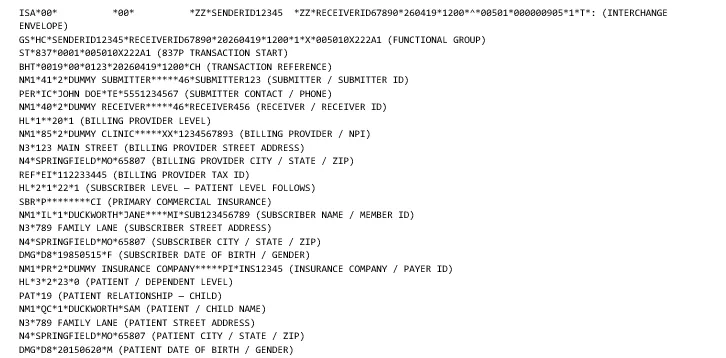
You don't have to memorize where every piece of information lives in an 837.
Use a beginner-friendly 837 Quick Reference to help locate common claim information like providers, members, diagnoses, procedures, dates, charges, and more.
Instead of trying to memorize a giant EDI manual, you'll have a practical reference you can come back to while you're learning—and later when you need a refresher.
Learn to Work With EDI Using a Free Tool
You don't need expensive EDI software just to start learning how to work with a file.
You'll learn how to use a free tool, to make EDI easier to read, navigate, search, and safely edit during the course.
You'll leave knowing how to open an EDI file and actually work with the data instead of just staring at a wall of text.
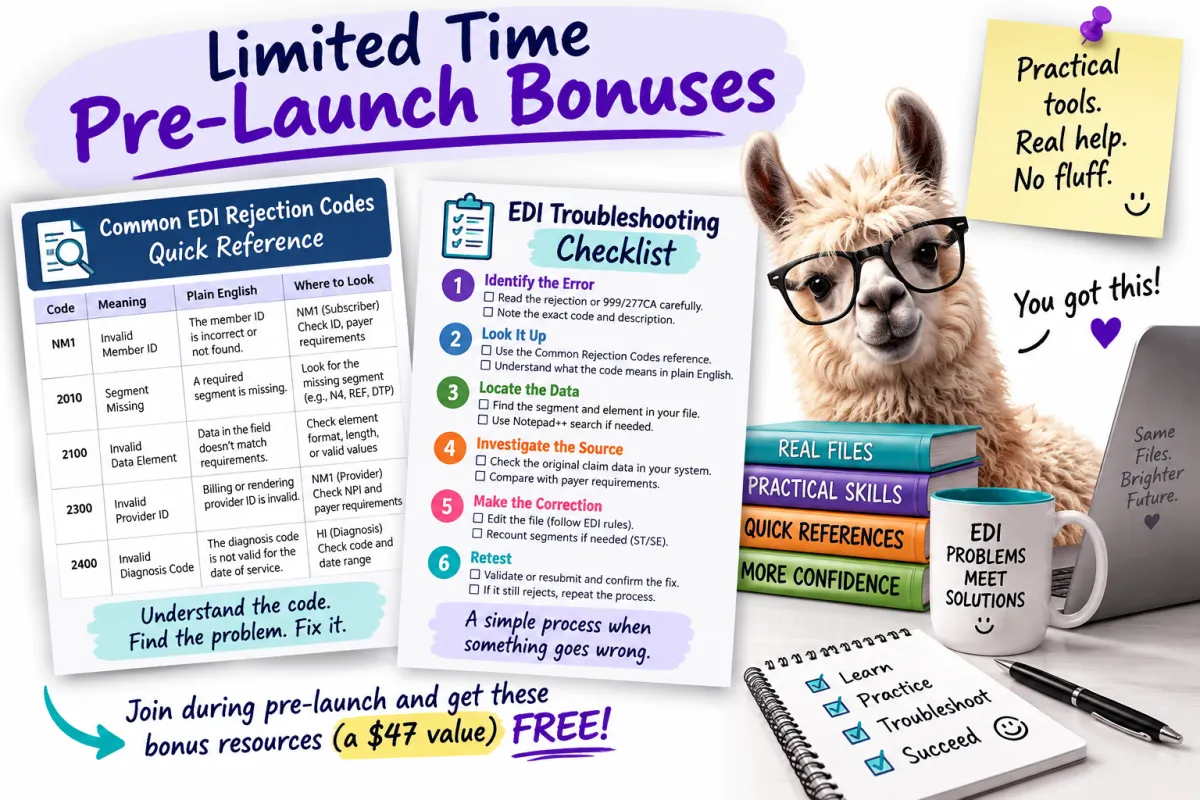
Limited Time Pre-Launch Bonuses
Enroll During Pre-Launch and You'll Also Get:
Common EDI Rejection Codes Quick Reference
Keep a practical reference nearby when an EDI rejection appears, with plain-English guidance on what the code means and where to begin investigating.EDI Troubleshooting Checklist
A simple step-by-step workflow you can use when something goes wrong, so you're not staring at an error wondering, “Okay... now what do I do?”Founding Student Access
Join during pre-launch and help shape the finished course. Submit questions and feedback as you work through the training, and common sticking points may become additional examples, explanations, and resources.
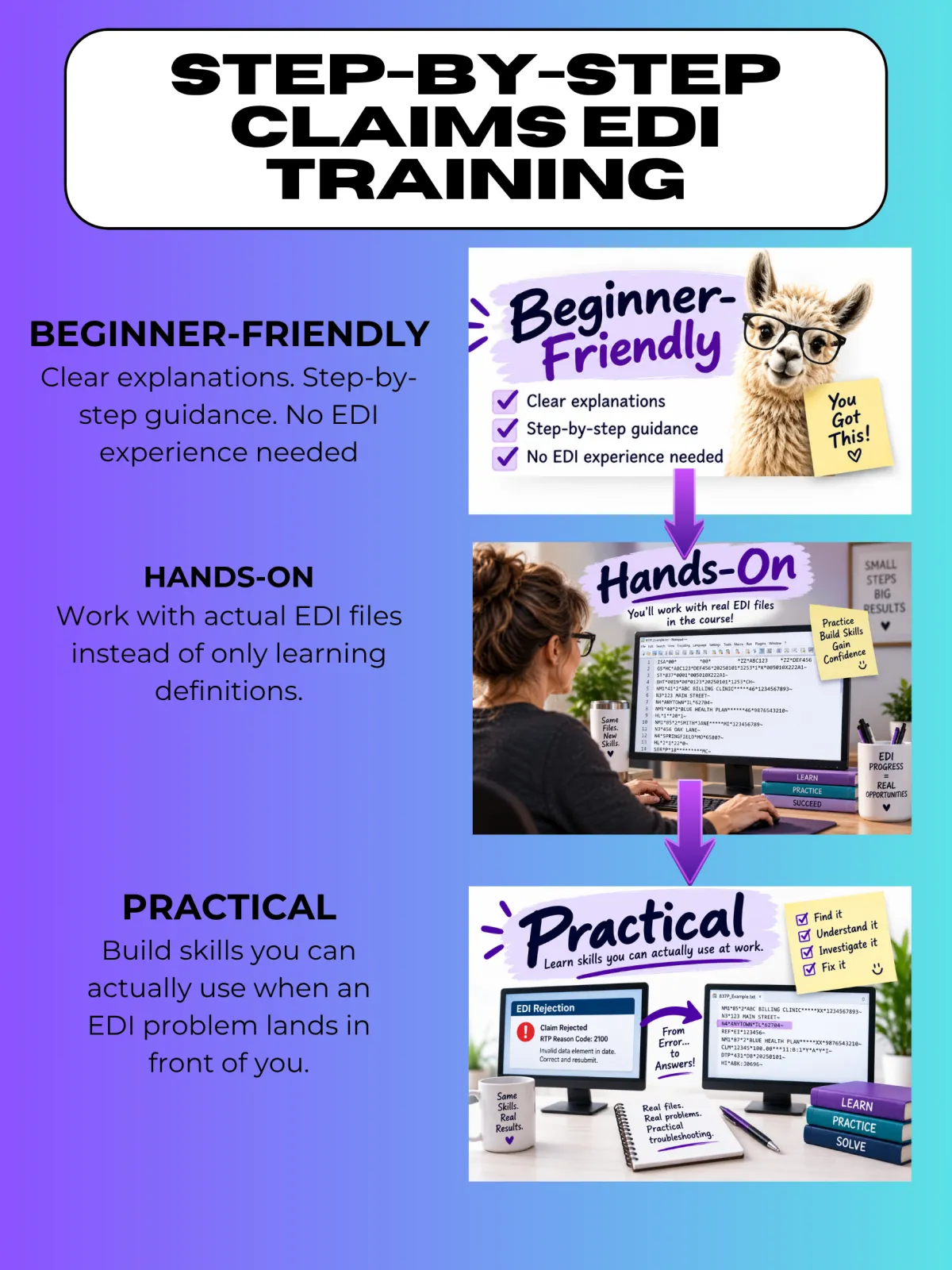
What's Included In 14 Day Claims EDI Decoder
Meet Your Instructor

Hi, I’m Robin Smith, and I’ve worked with healthcare EDI for more than 20 years—but I didn’t start in EDI. I started as a claims adjudicator.
Before I ever learned how to read an 837, I learned healthcare claims. I understood members, providers, claim numbers, diagnosis codes, procedure codes, dates, charges, and the information involved in processing a claim. I eventually moved into training others before my career took me into healthcare EDI. And that background turned out to matter.
When I first started working with EDI, I wasn’t learning completely unfamiliar information. A lot of the information inside those intimidating files was information I already understood. I just had to learn where it lived and what it looked like in EDI.
I didn’t learn EDI by sitting down and memorizing an implementation guide from beginning to end. I learned by working with actual files.
I opened them. I searched through them. I investigated errors. I fixed problems. I asked questions. I made mistakes. And over time, what once looked like a wall of letters, numbers, asterisks, and squiggles started to make sense.
For more than 20 years, I’ve worked hands-on with healthcare EDI, including professional and institutional claims, investigating errors and rejections, correcting files, working through data and mapping issues, and helping other people understand what they were looking at when EDI landed in front of them.
And somewhere along the way, I realized something important:
You don’t have to understand every piece of healthcare EDI before you can start working with it.
You don’t have to memorize hundreds of segments and loops before you open a file. And you don’t have to become “the EDI expert” before you’re capable of investigating a problem.
If you already understand healthcare claims, you already have part of the foundation.
That’s why I created the 14 Day Claims EDI Decoder.
I wanted to teach healthcare claims EDI the way I believe it makes the most sense to learn it: start with the actual data, connect it to information you already recognize, and build your skills from there.
You’ll learn to READ IT. FIND IT. FIX IT. And INVESTIGATE IT.
Because my goal isn’t to turn you into someone who has memorized an EDI manual.
My goal is to help you become the person who can open an EDI file, look at the problem in front of you, and say:
“Okay. I know where to start.”
Who Is This Course For?
✅ You already understand U.S. healthcare claims but have little or no experience working with EDI.
✅ You’ve seen EDI mentioned in healthcare billing or claims job postings and wished you understood what it actually meant.
✅ You want practical EDI skills that can help you investigate claim issues more independently and expand your healthcare claims knowledge.
This Course May Be a Good Fit If You’re a...
✅ Medical Biller
✅ Claims Adjudicator or Claims Examiner
✅ Accounts Receivable Professional
✅ Healthcare Claims or Revenue Cycle Professional
✅ Someone working with healthcare claims who wants to add EDI knowledge
Who Is This Course NOT For?
You’re looking for advanced EDI implementation, mapping, or technical integration training.
You’re looking for a course that teaches healthcare claims from the beginning. This course assumes you already understand the basics of U.S. healthcare claims
Frequently Asked Questions
What skill level is this
course for?
This course is designed for people who already understand the basics of U.S. healthcare claims but have little or no experience working with healthcare EDI. You do not need previous EDI experience.
Do I need to have ever seen an 837 file before?
No. In fact, this course is designed with the assumption that you may have never opened an 837 before. We’ll start there and build your skills step by step.
How long do I have access to the course?
You’ll receive lifetime access, so you can work through the training at your own pace and return to the lessons and resources whenever you need a refresher.
Do I need special EDI software?
No expensive EDI software is required. We’ll use a free text editor, to work with the training files throughout the course.
Can’t I just learn healthcare EDI on YouTube or by searching online?
You can find information about healthcare EDI online. The challenge is figuring out what a beginner actually needs to learn first and how all the pieces connect. This course gives you a structured, hands-on path built specifically for people who already understand healthcare claims and want to learn how that familiar information appears and works inside EDI.
Will this course make me an EDI expert?
No—and that’s not the goal.
Healthcare EDI is a huge field, and no 14-day course can teach you everything there is to know.
The goal of this course is to give you a practical foundation in healthcare claims EDI so you can open an 837, understand what you’re looking at, find familiar claim information, safely correct common problems, and know where to start when you need to investigate an issue.
You won’t finish knowing everything about EDI.
You’ll finish with the foundational knowledge and understanding to apply what you’ve learned to real-world claims scenarios.